Launceston, Tasmania
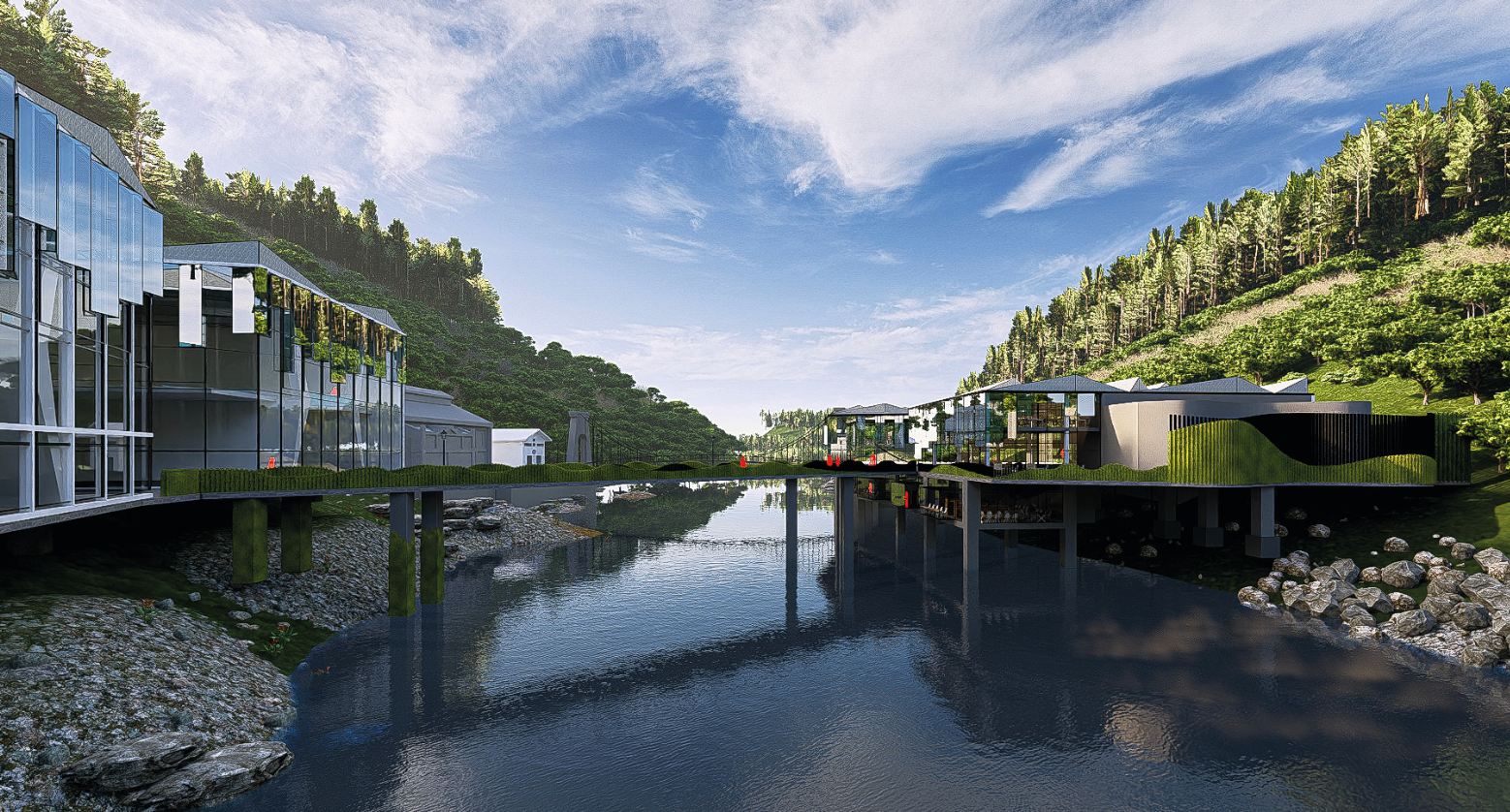
Located in Launceston’s picturesque Cataract Gorge in Tasmania, the Duck Reach Power Station project embodies a harmonious integration of history, nature, and education.
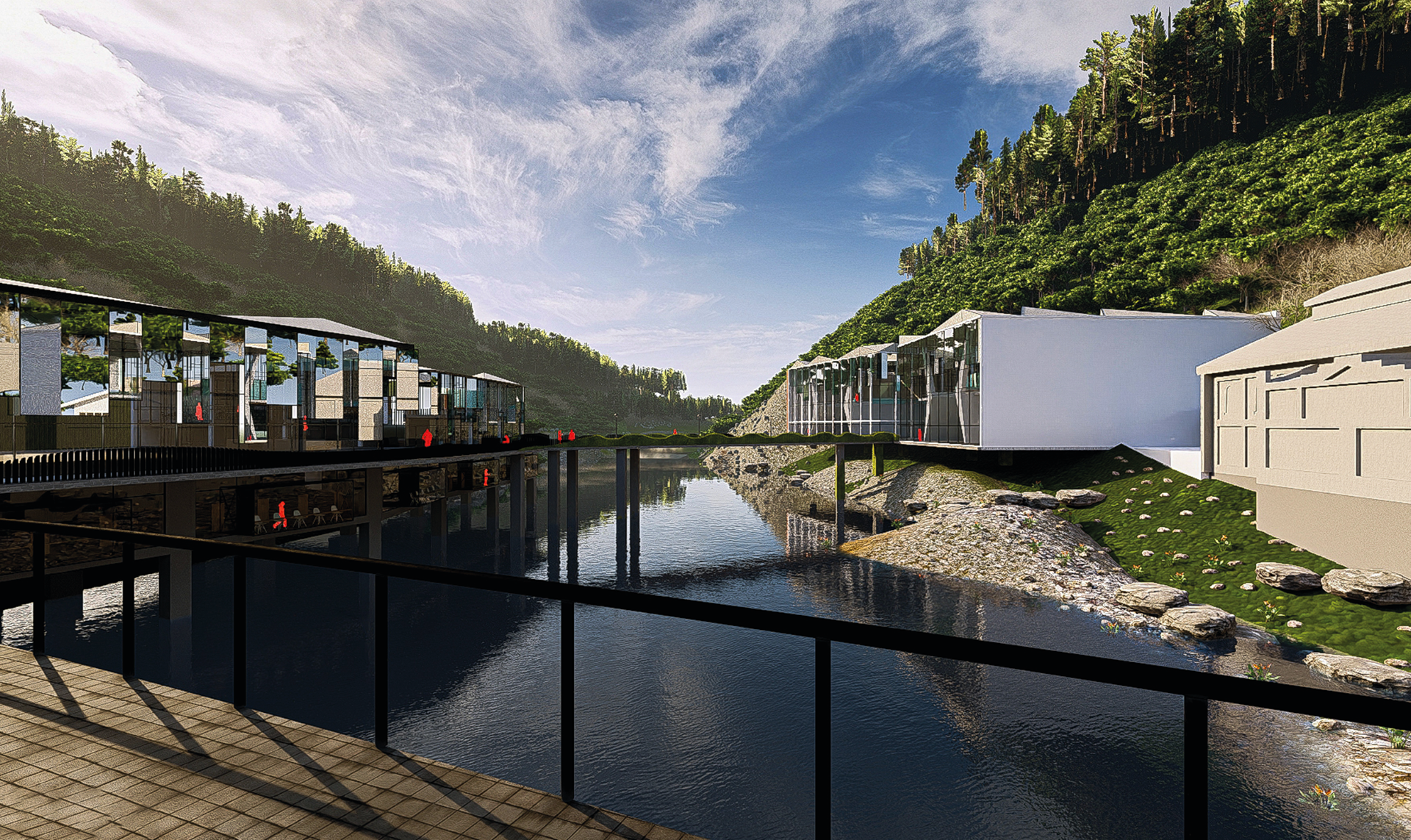
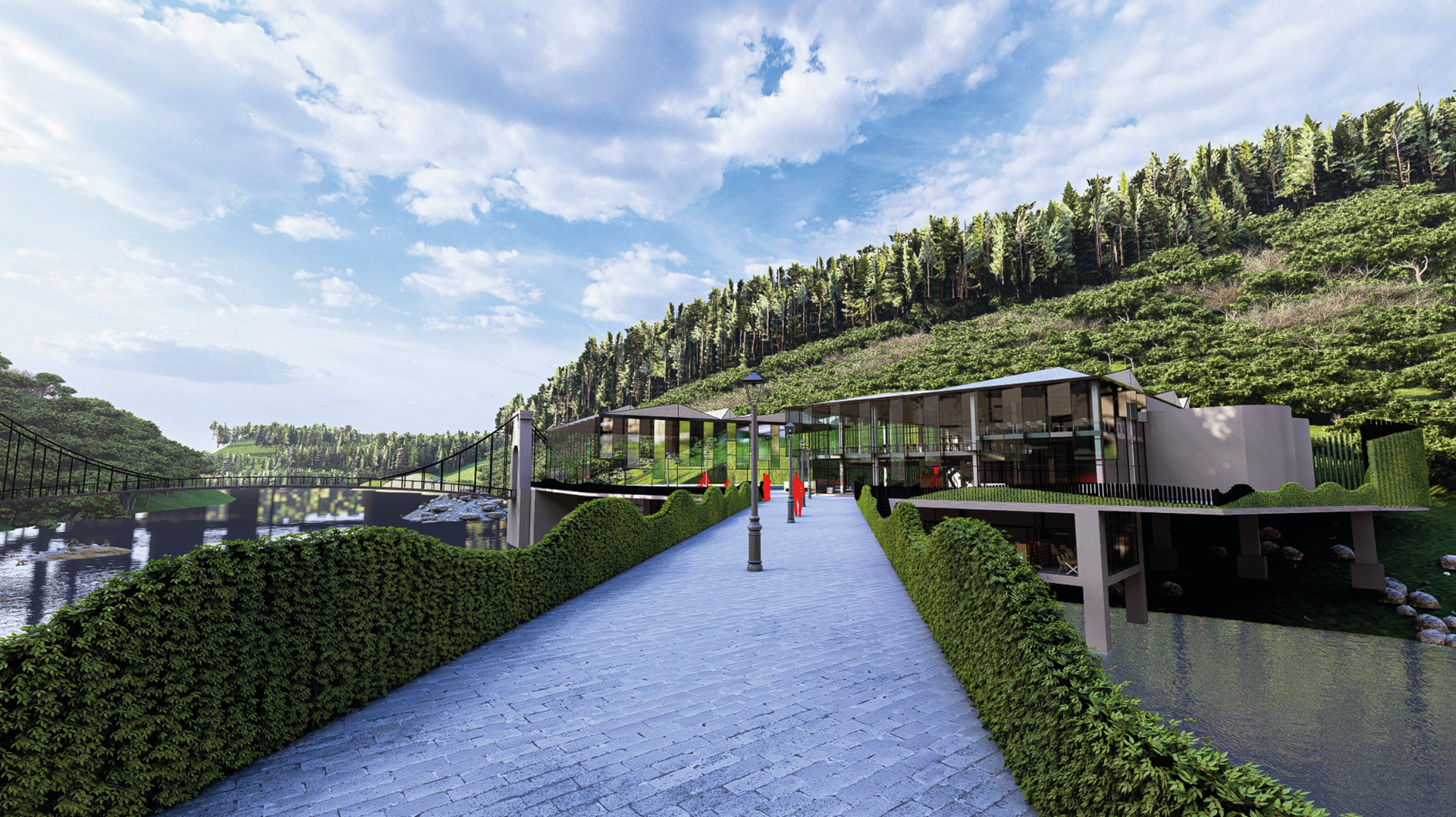
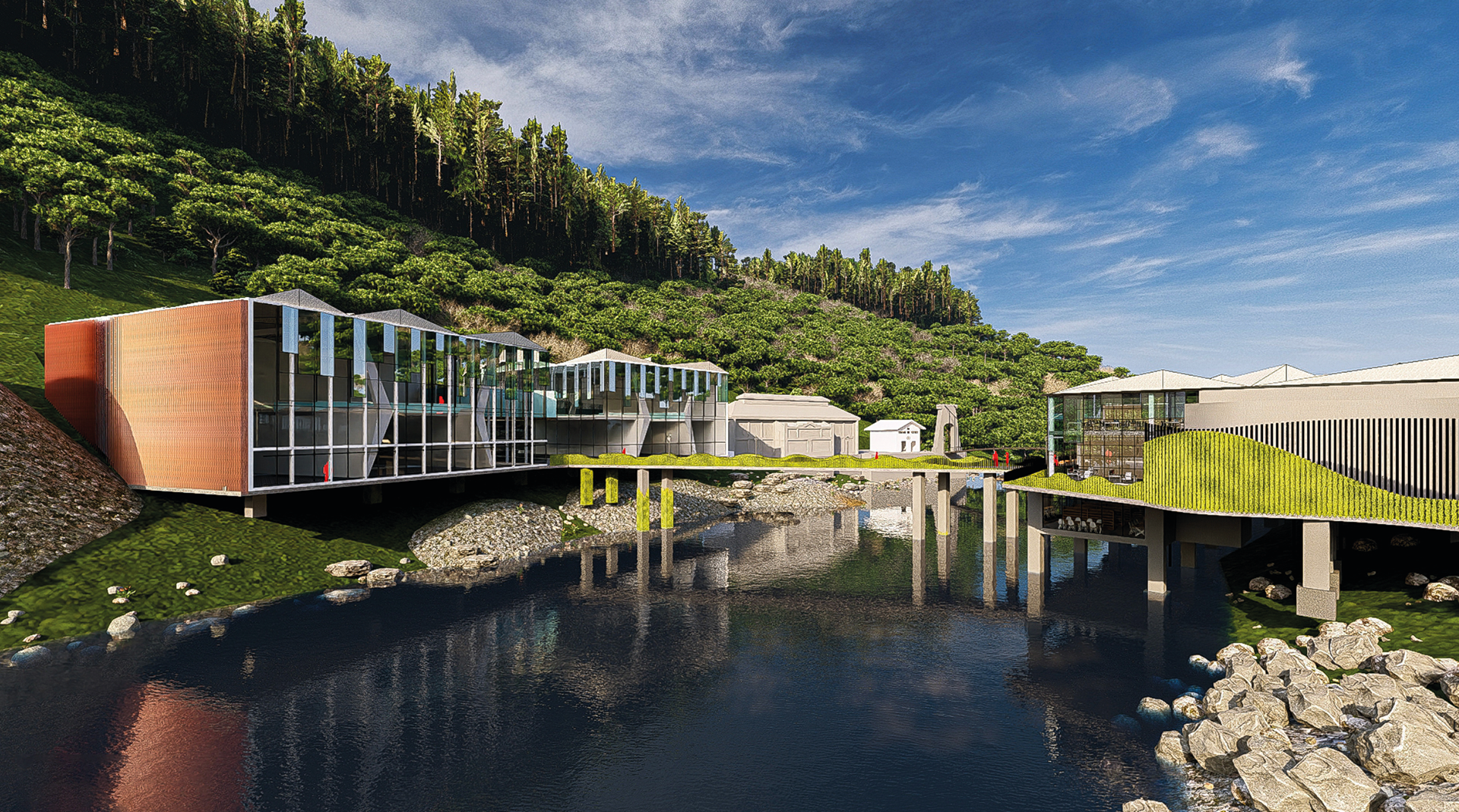
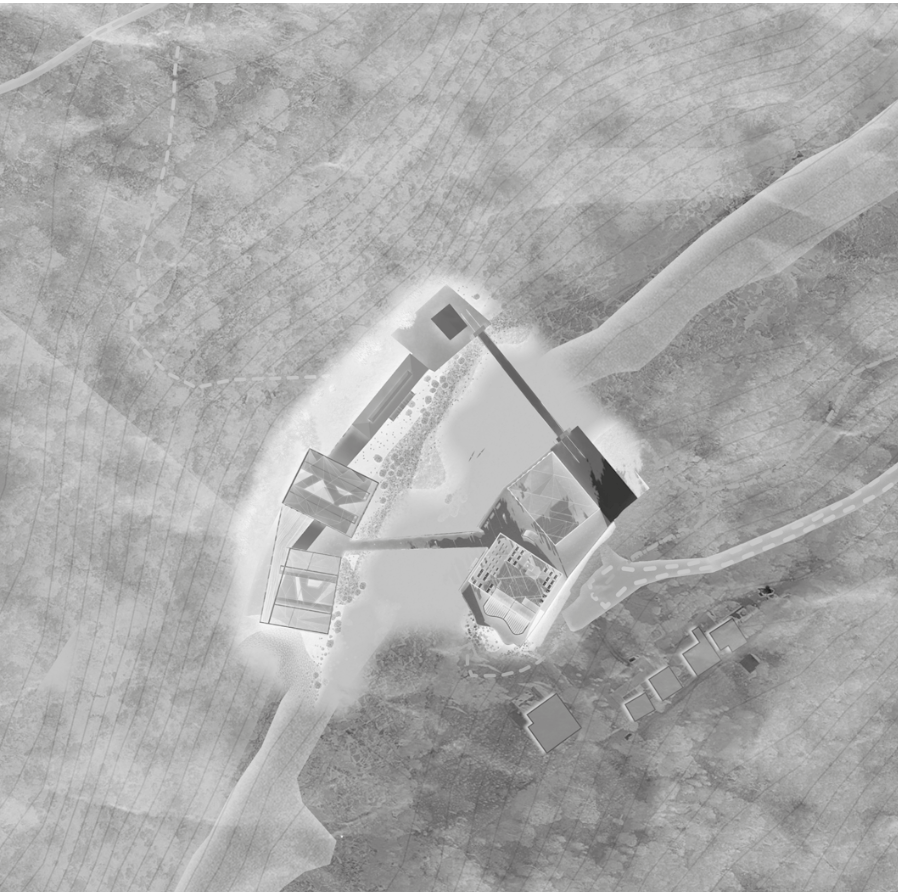
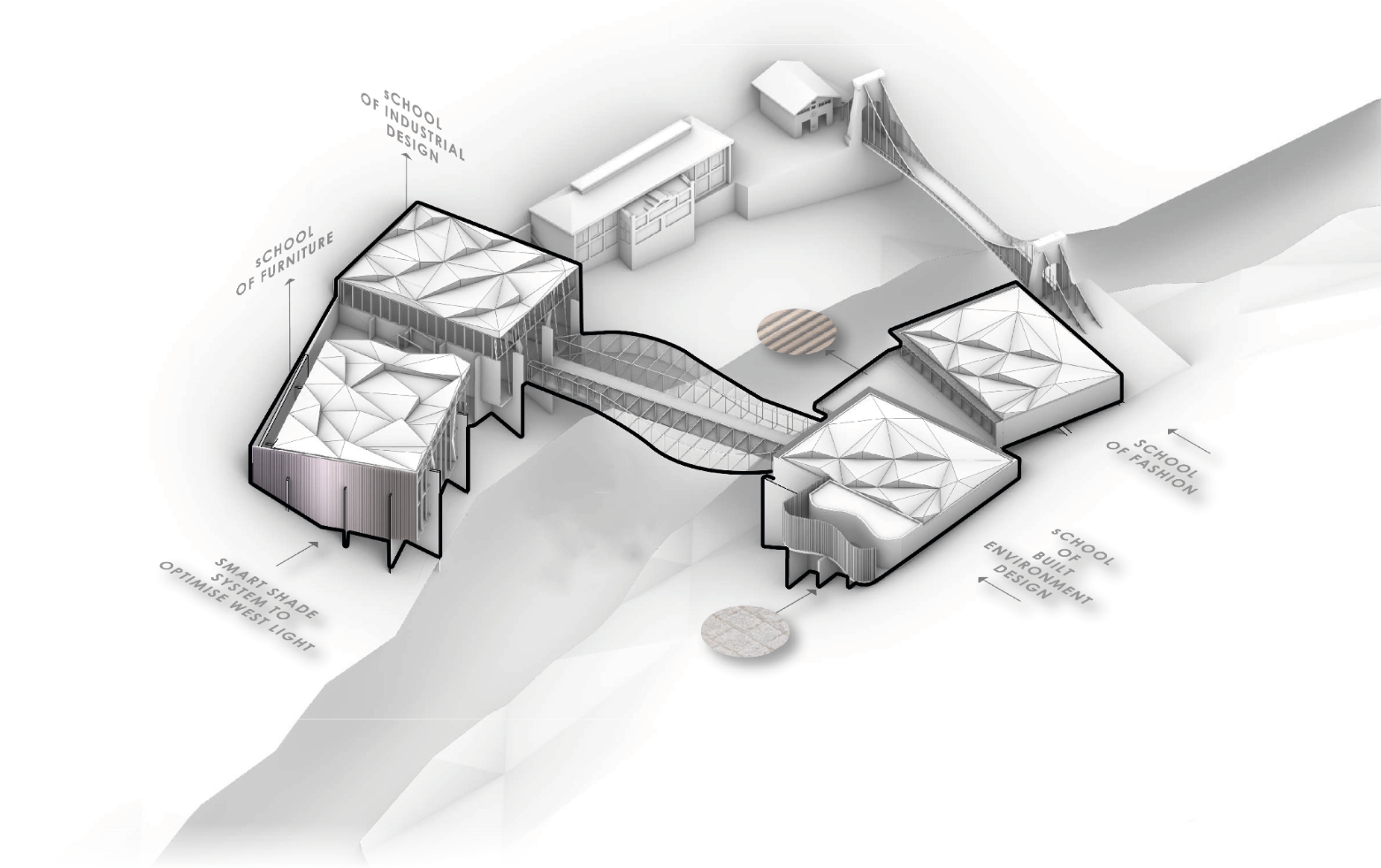
The design features four distinct buildings, each uniquely crafted to maximize natural light penetration into the gorge. Strategically located on both sides of the river, they are connected by a secondary bridge, alleviating traffic on the existing bridge while enhancing connectivity.
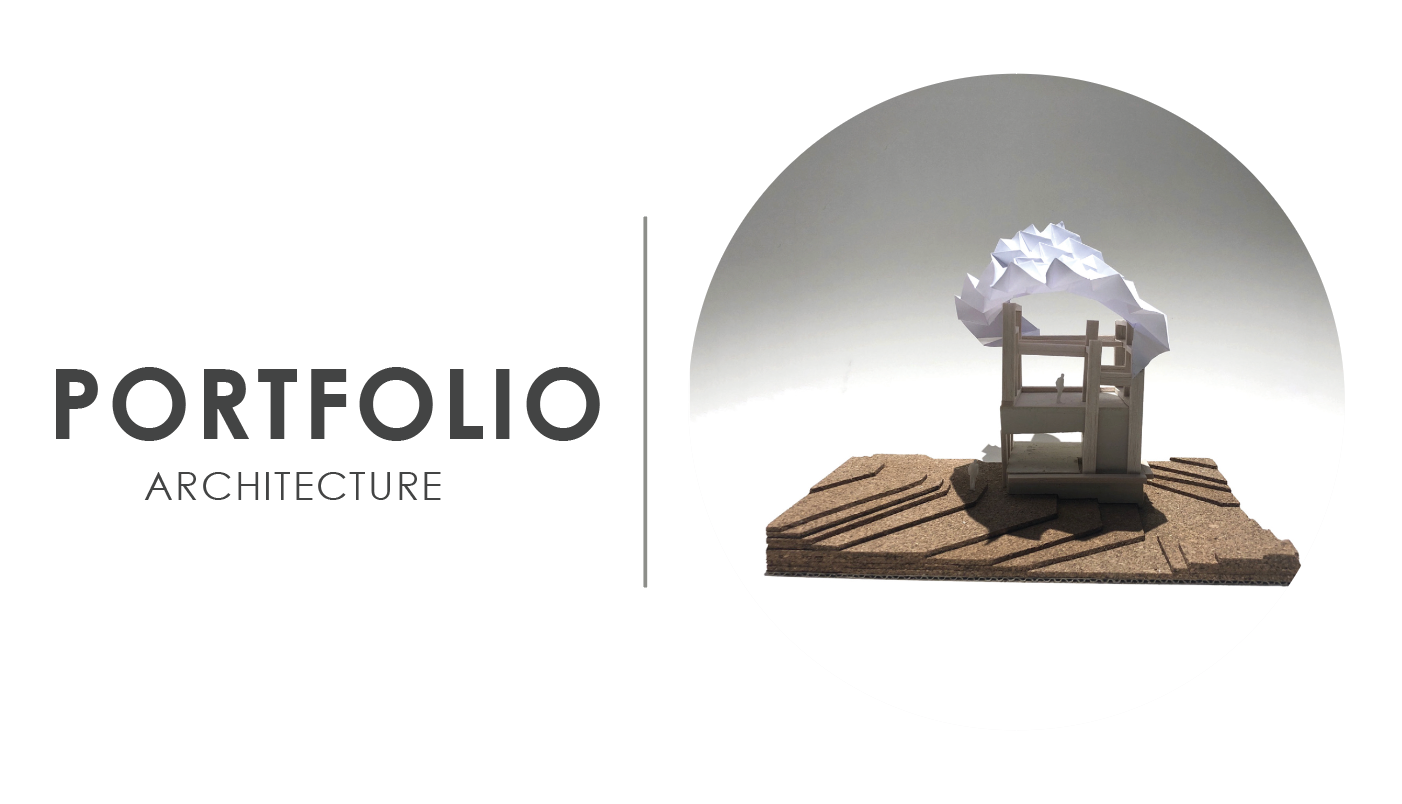
Sustainability is integral to the design, exemplified by roof folds that capture sunlight from various angles and serve as rainwater collection systems. The buildings are ingeniously linked across different levels, taking advantage of the gorge’s topography to create spaces that interact closely with the river, some even positioned below ground level.
The Duck Reach Power Station project not only preserves the site’s natural beauty but also enriches it through thoughtful architecture that respects its surroundings while promoting environmental stewardship and educational engagement.
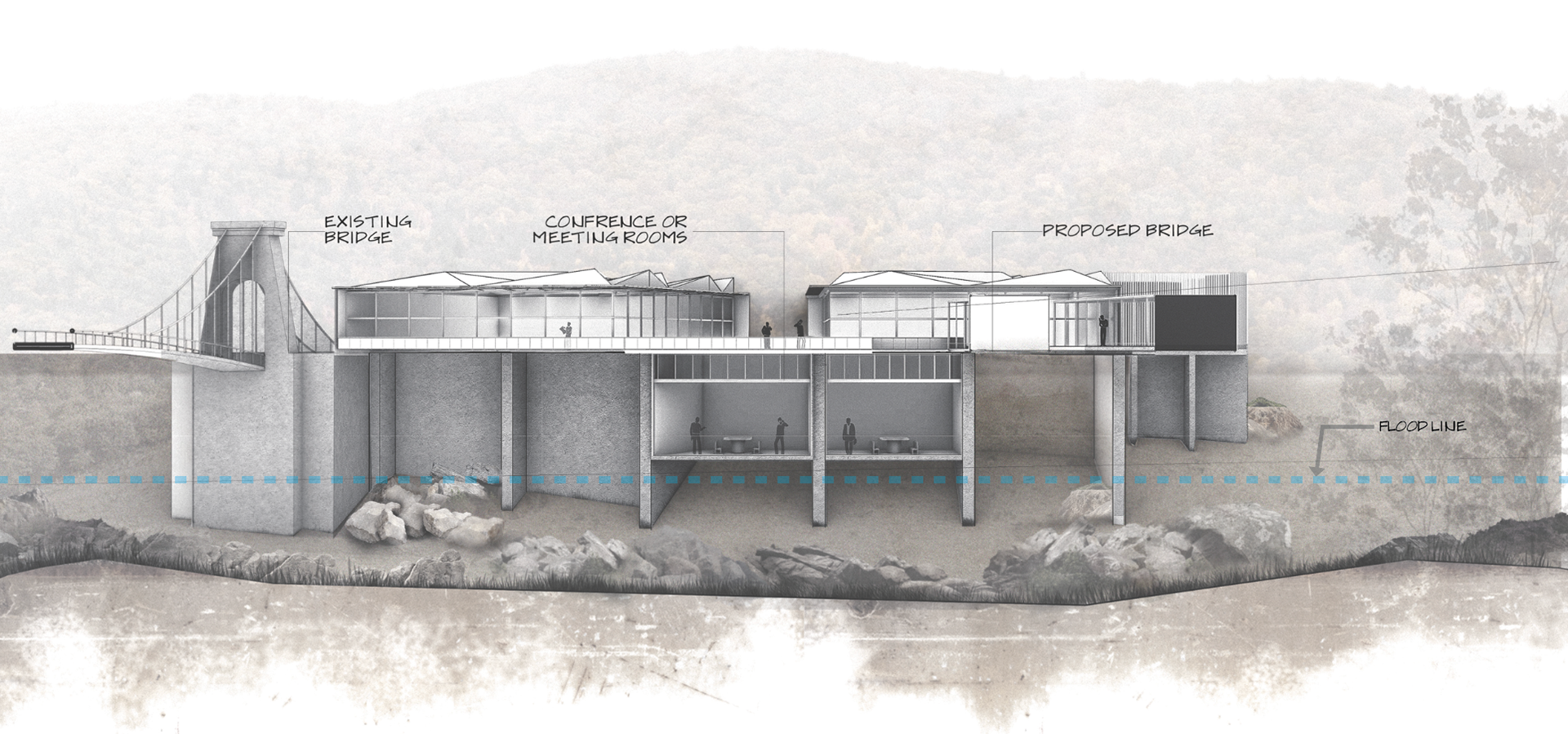
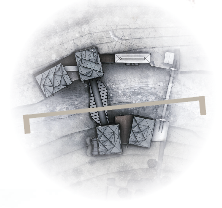
SITE SECTION
Fashion and Build Environmental Schools

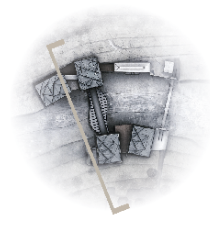
SITE SECTION
Build Environmental and Furniture design schools
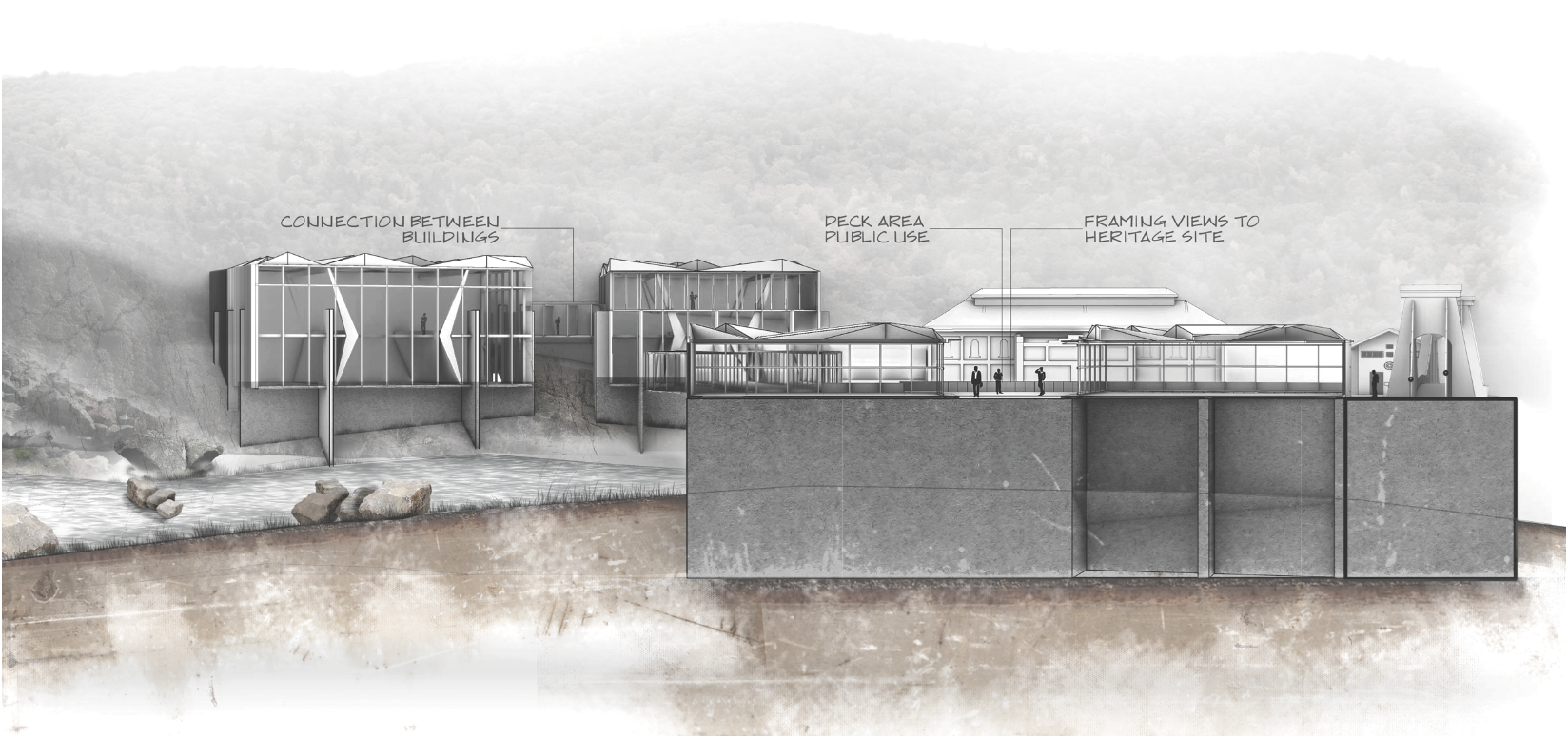
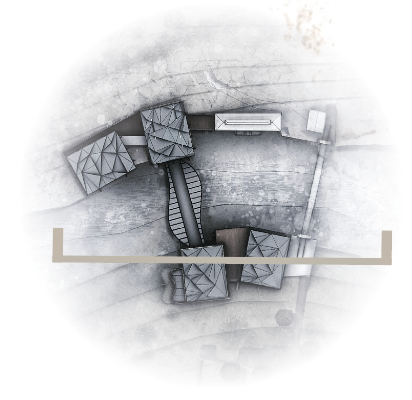
INTERNAL SECTION
Fashion and Build Environmental Schools
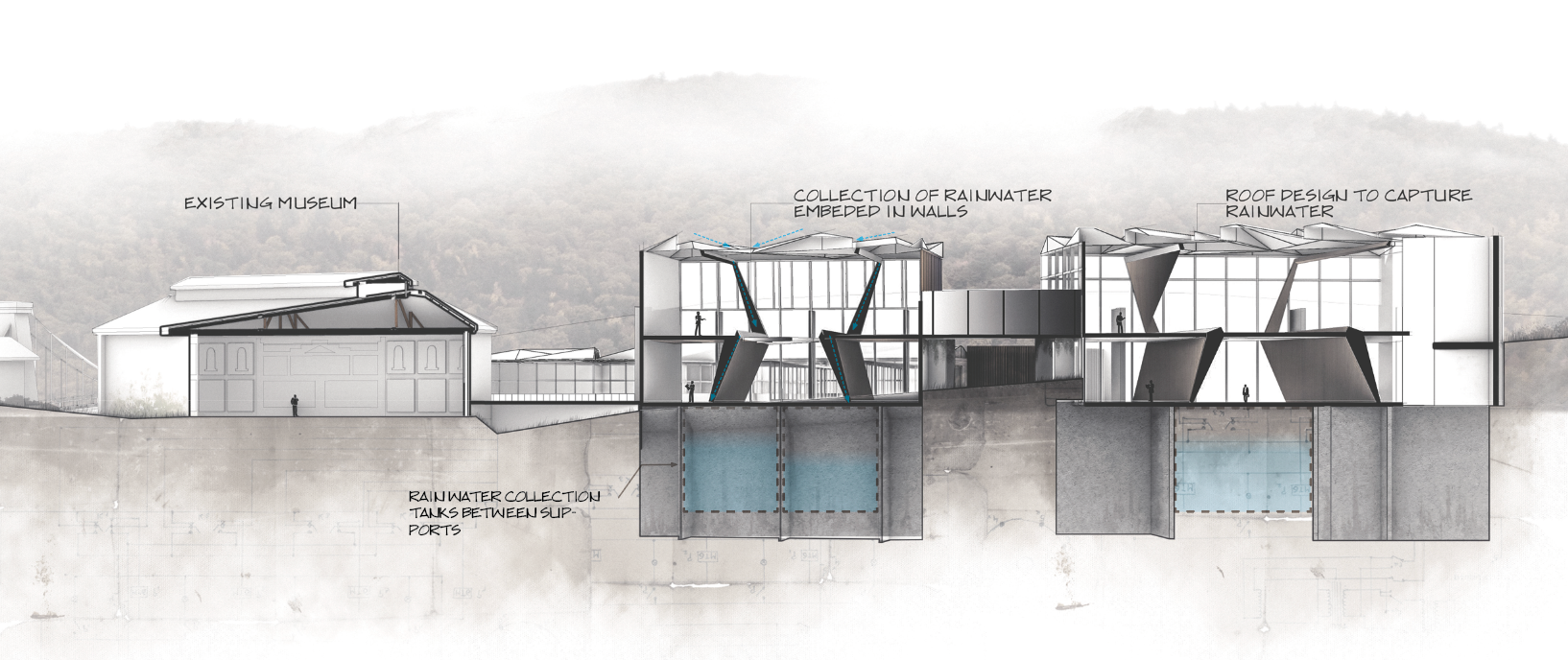
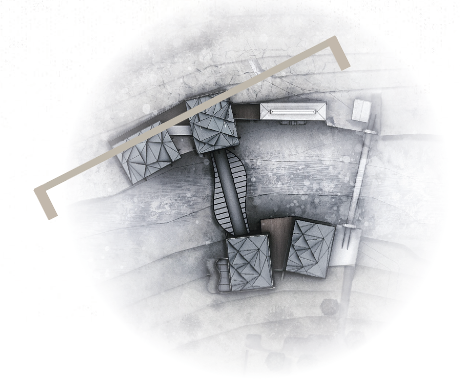
INTERNAL SECTION
Industrial design and Furniture Schools
FURTHER DEVELOPMENT OF BUILD ENVIRONMENT SCHOOL
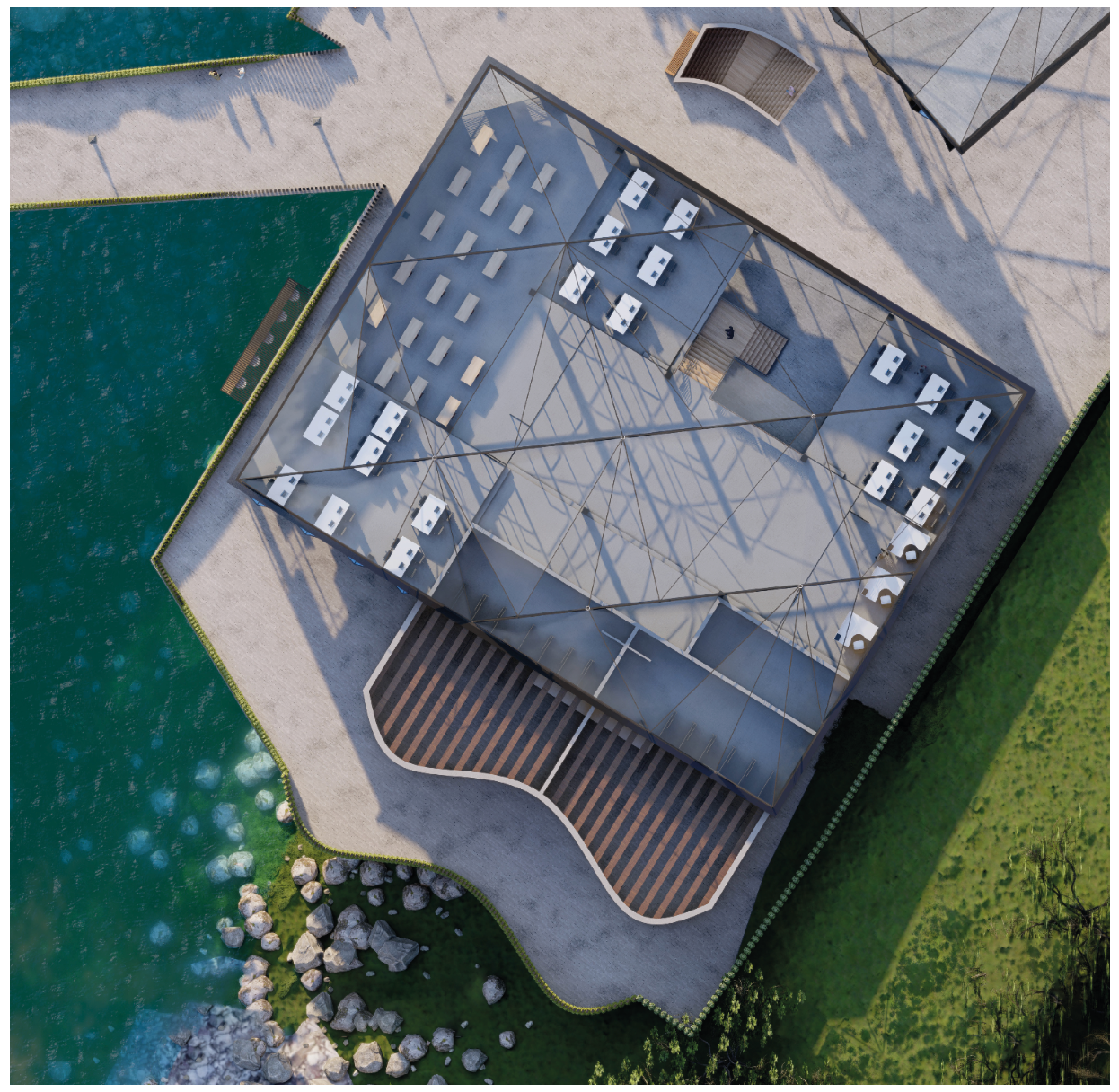
The School of Built Environment and Design, located in Launceston, Tasmania, is one of four buildings designed around the Duck Reach Power Station, nestled within a gorge. The design aims to integrate both natural and man-made elements, with a rectilinear structure enveloped by varying angles, heights, and reflections, creating a seamless blend between the built environment and its natural surroundings.
The school's design is layered, with internal supports encased in an inverted rhythm of mirrored glass. This glass reflects the irregular heights of the site’s vegetation, symbolizing our role in minimally intruding upon the landscape. The mirrored panels also serve as a reminder that we are guests in this environment, with their rhythmic heights echoing the natural forms around them.
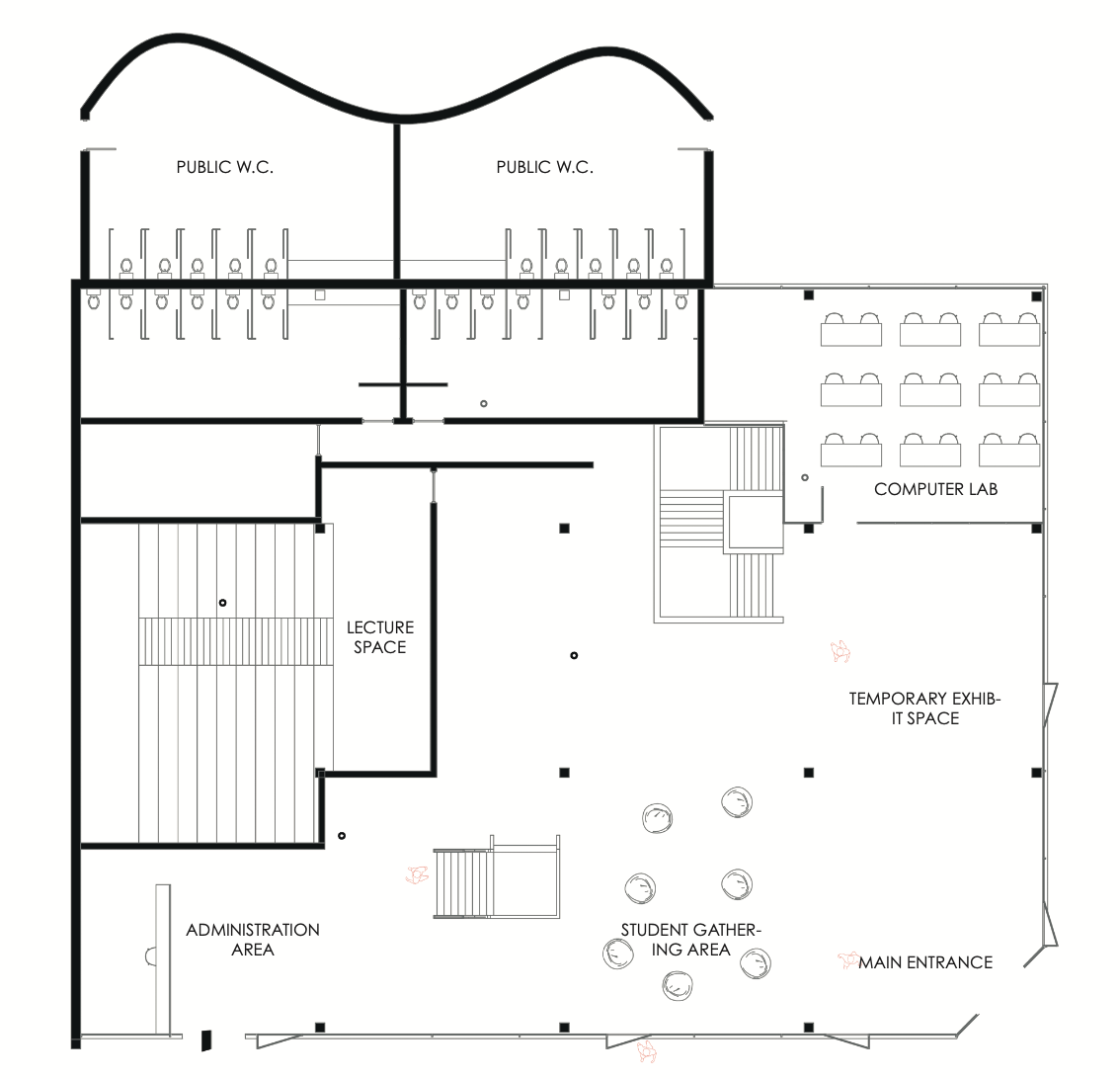
GROUND FLOOR
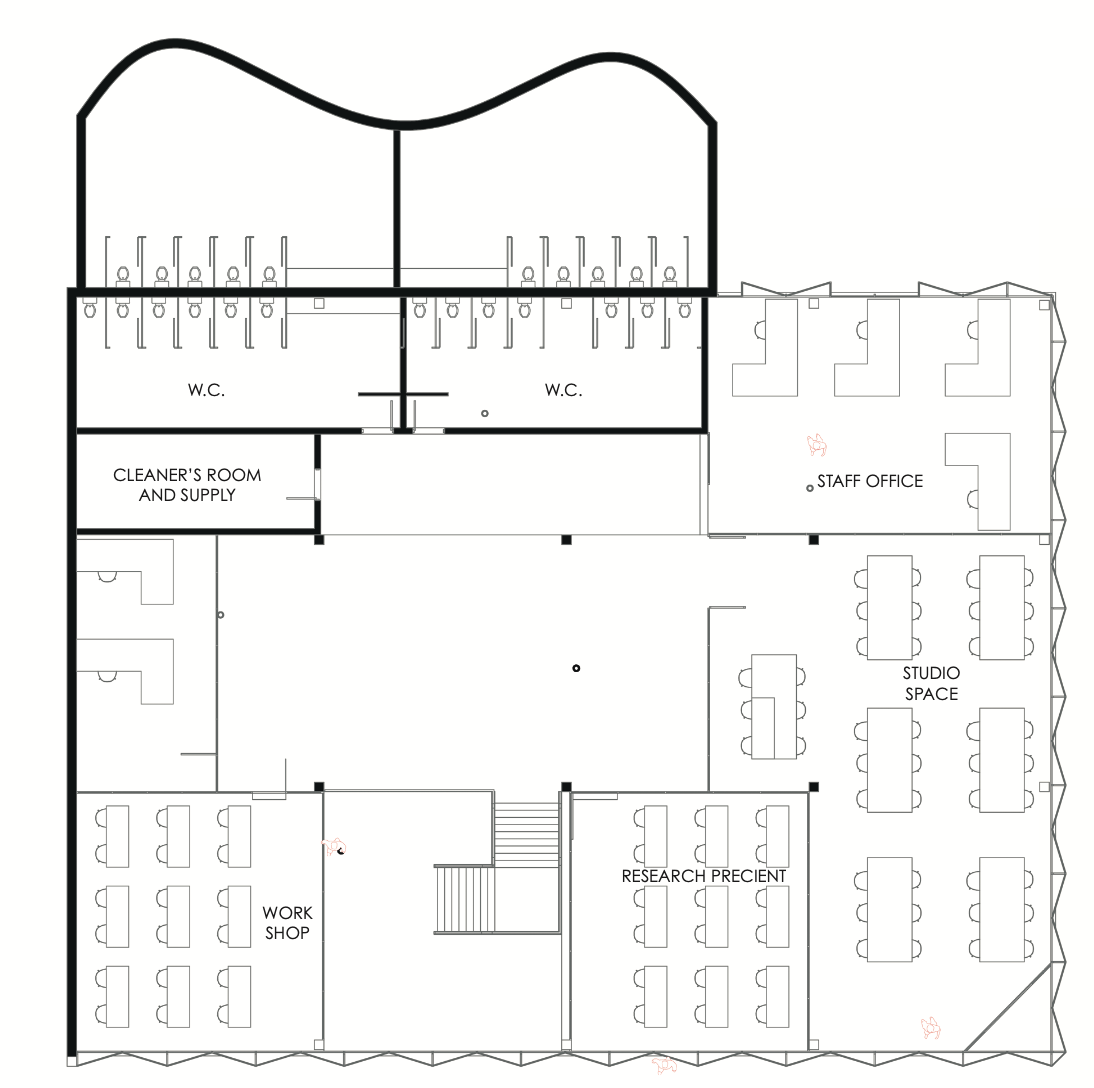
FIRST FLOOR
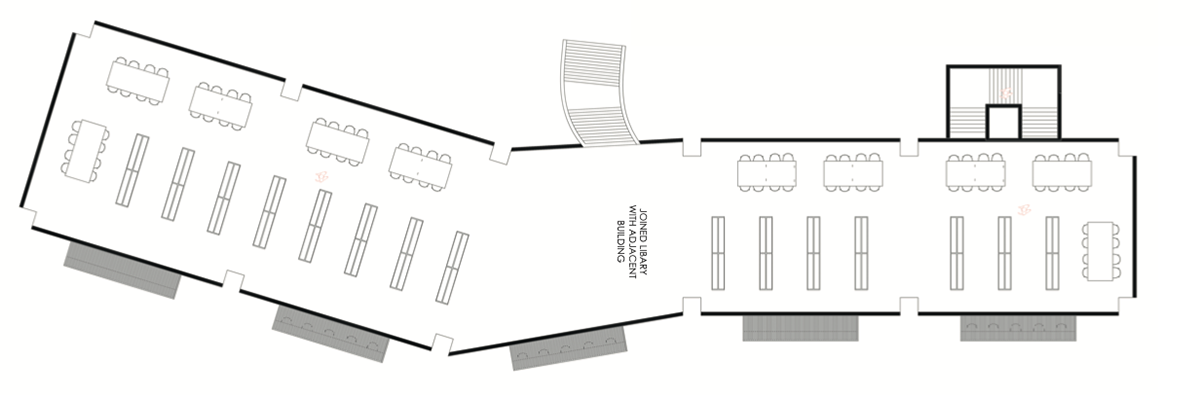
BELOW GROUND FLOOR (LIBRARY)
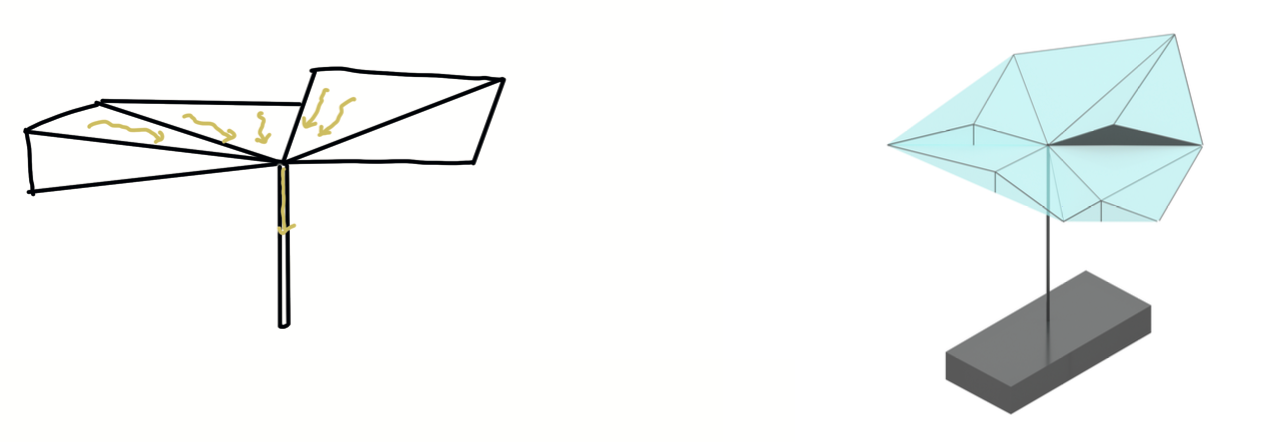
ROOF WATER COLLECTION FOLDS
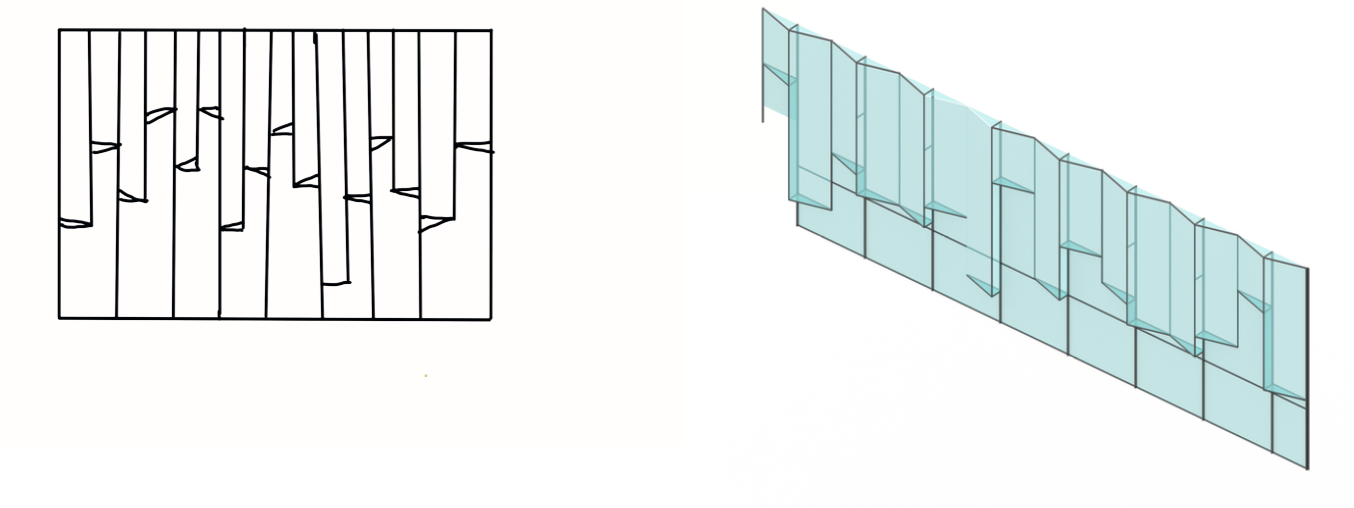
Environment REFLECTIVE PANELS
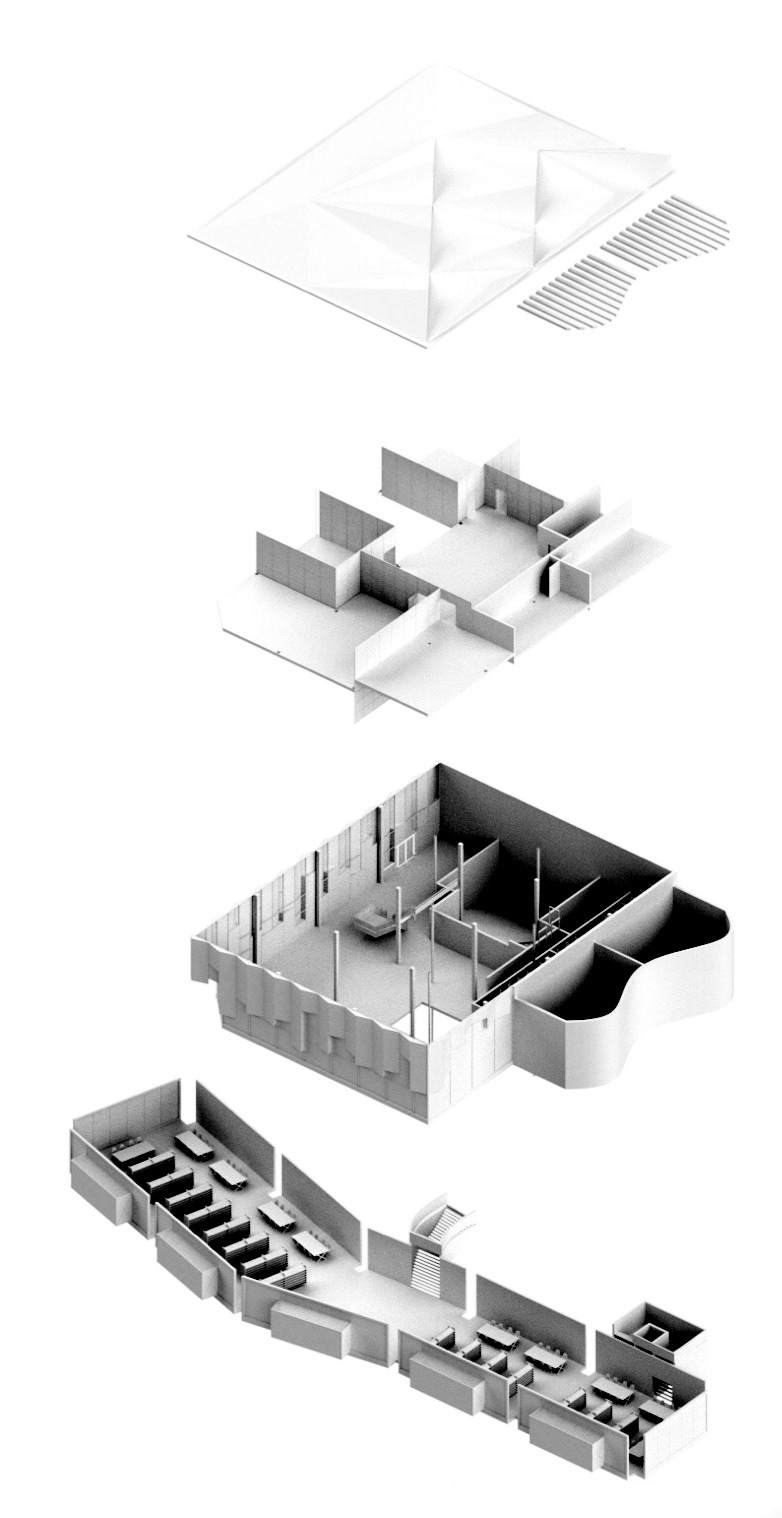
The roof of the structure is designed with an origami-like fold, creating a crown-like appearance as the panels change angles. This design compresses larger areas into smaller ones, allowing for effective daylight capture, keeping the interior well-lit and warm despite the limited sunlight in the gorge. The folding panels also create a spiral pattern that directs rainwater to five points where it is funneled to the base of the structure. These exposed funnels allow rainwater to flow gently through the building, creating an echoing sound that enhances the ambiance of the spaces within.
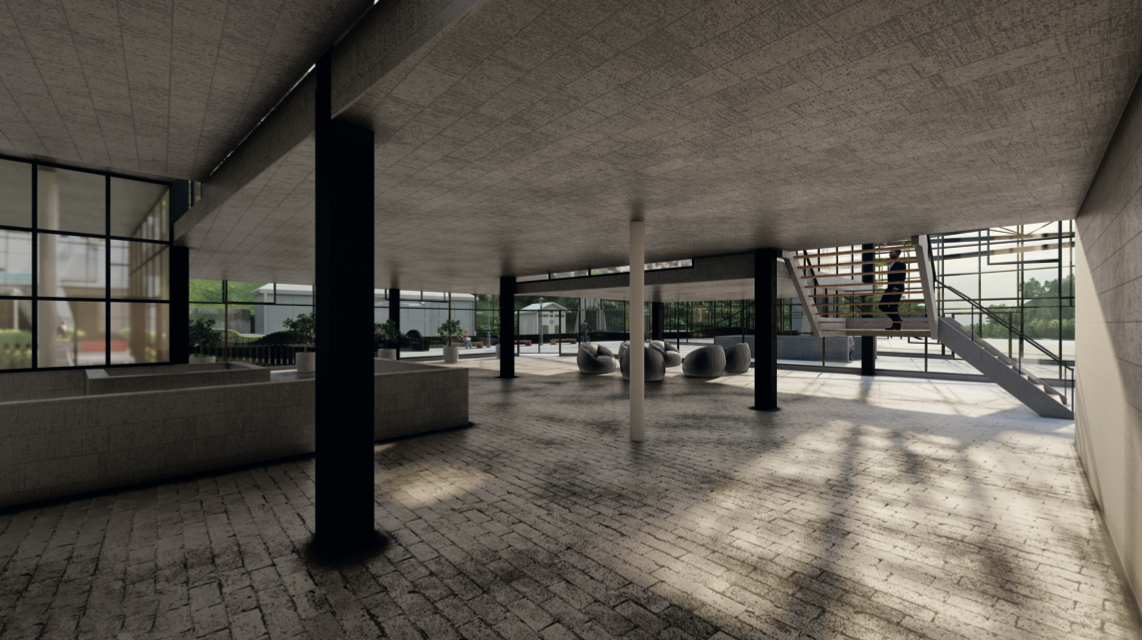
Inside, staggered rooms at different elevations allow light to seep through gaps from the upper to the ground floor. These platforms, suspended by the internal structure, are enclosed by frames and divided by frosted glass, creating an open environment that still offers privacy.
Timber planks supported by concrete sides connect the ground floor to the lower-level library, offering visual connections to the site as individuals ascend and descend the stairs. The library, seemingly suspended from the base of the structure, links the School of Built Environment with the Fashion School. Additionally, extruded pods within the library feature open-bottom frame designs that enhance the acoustics, echoing the gentle sounds within the space.